
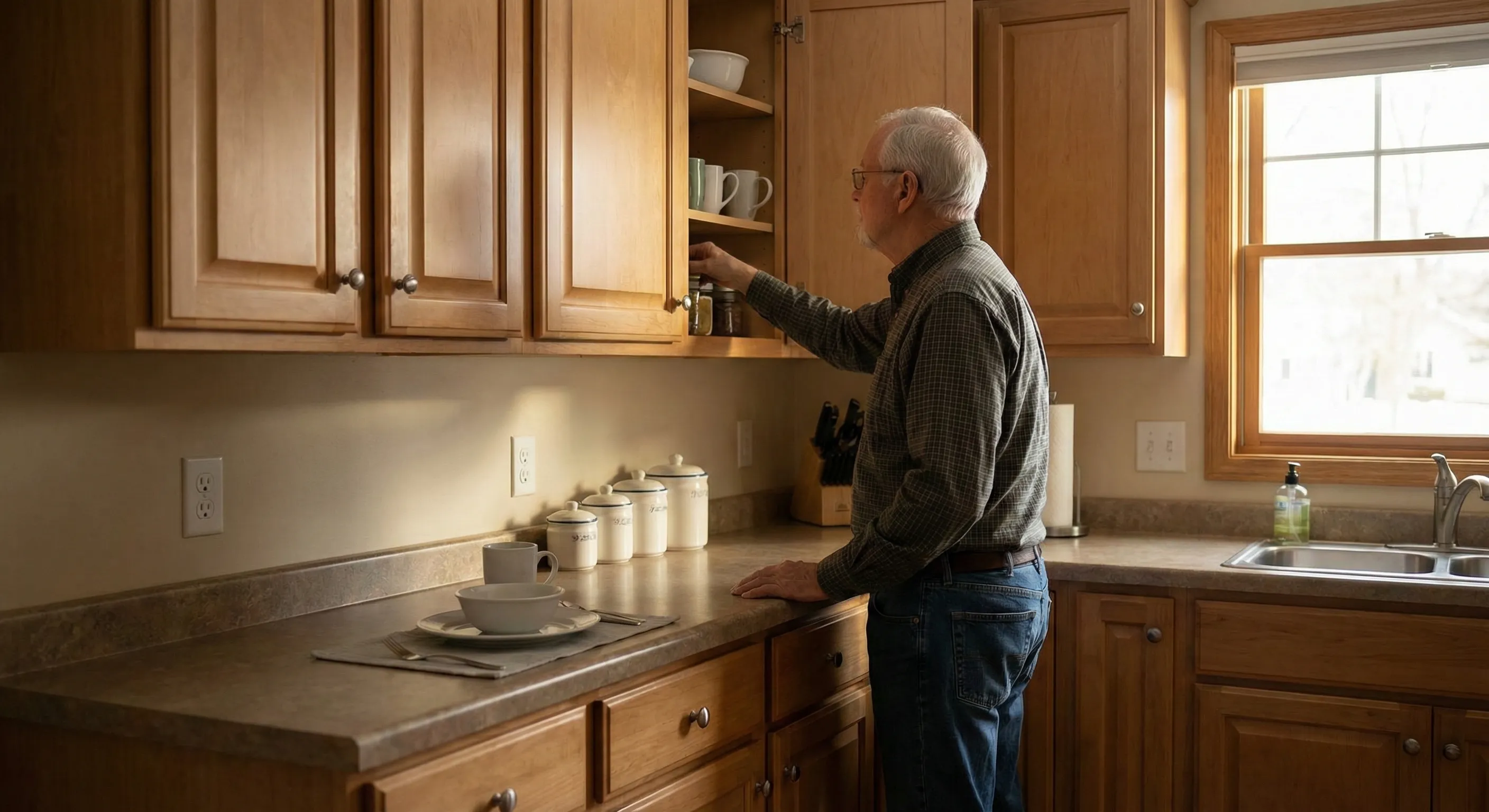
Living alone.

Independence is the goal. But when no one's there, small problems become big ones faster.

Millions of seniors live alone β€” and most of them want to keep it that way.

Living alone isn't automatically dangerous. But it does change the equation. There's no one to notice small changes. No one to help if something happens. No one to provide the kind of daily check-in that catches problems early.

The risk isn't living alone. It's having no one aware of what's happening day to day.

What Families Worry About

πŸ‘οΈ

No witness for daily changes

Weight loss, mobility changes, confusion, reduced hygiene β€” things family would notice if they were there.

⏱️

Emergencies become time-critical

A fall, a cardiac event, a stroke β€” outcomes depend on how fast help arrives. Living alone extends that window.

πŸ“‰

Routine breakdown

Sleep inversion, skipped meals, less movement. Without external structure, routines drift β€” often downward.

🏠

Home hazards go unfixed

Clutter accumulates. Lightbulbs burn out. Rugs slip. Without someone else there, hazards persist.

What Can Happen

Living alone adds risk not because of what goes wrong β€” but because of how long it takes to notice:

  • Longer "down time" after an incident β€” hours on the floor turns a fall into a hospitalization
  • Gradual decline goes unnoticed β€” until a crisis forces intervention
  • Isolation accelerates health problems β€” depression, cognitive decline, immune issues
  • Family burnout β€” constant worry, endless check-in calls, never-ending uncertainty

Most seniors living alone are fine. But "fine" can become "not fine" quickly β€” and nobody knows until it's obvious.

The Check-In Cycle

"I call every day. If she doesn't answer, I panic. If she does answer, I wonder what I'm not seeing."

Family phone calls provide reassurance β€” but only for a moment. They don't show patterns. They don't reveal what's really happening between calls. And they can become exhausting for everyone involved.

Awareness shouldn't require constant calling.

What Helps

1

Know the real risks

A nurse-led assessment looks at the home objectively β€” mobility, medications, hazards, daily routines β€” and identifies what actually matters.

2

Fix the environment

Practical home modifications remove fall risks, improve safety, and make independent living more sustainable.

3

Gain quiet visibility

Pattern-based monitoring lets family know when something changes β€” without cameras, without constant pinging, without surveillance.

Independence, Not Isolation

Living alone doesn't mean being alone. But it does require systems that fill the awareness gap.

StillWell Health is designed for exactly this: providing family with visibility into what's actually happening, so seniors can stay independent without everyone worrying constantly.

No cameras required. No daily check-ins from strangers. Just awareness when it matters.

Why noticing small changes matters

πŸ“‰

Changes in routine often happen before visible problems

🚢

Reduced movement can increase fall risk

πŸ›οΈ

Bathroom and sleep changes are early warning signs

πŸ‘οΈ

Passive awareness helps families respond sooner, not later

We Serve Families Near You

Research shows most at-home falls aren't caused by sudden medical eventsβ€”they're driven by environmental factors that can be identified and addressed.

In situations like this, the most effective first step is a professional home safety reviewβ€”before small risks turn into bigger decisions.

Your parent lives alone.

Let's talk about what's realistic, what's risky, and what kind of support actually makes sense.