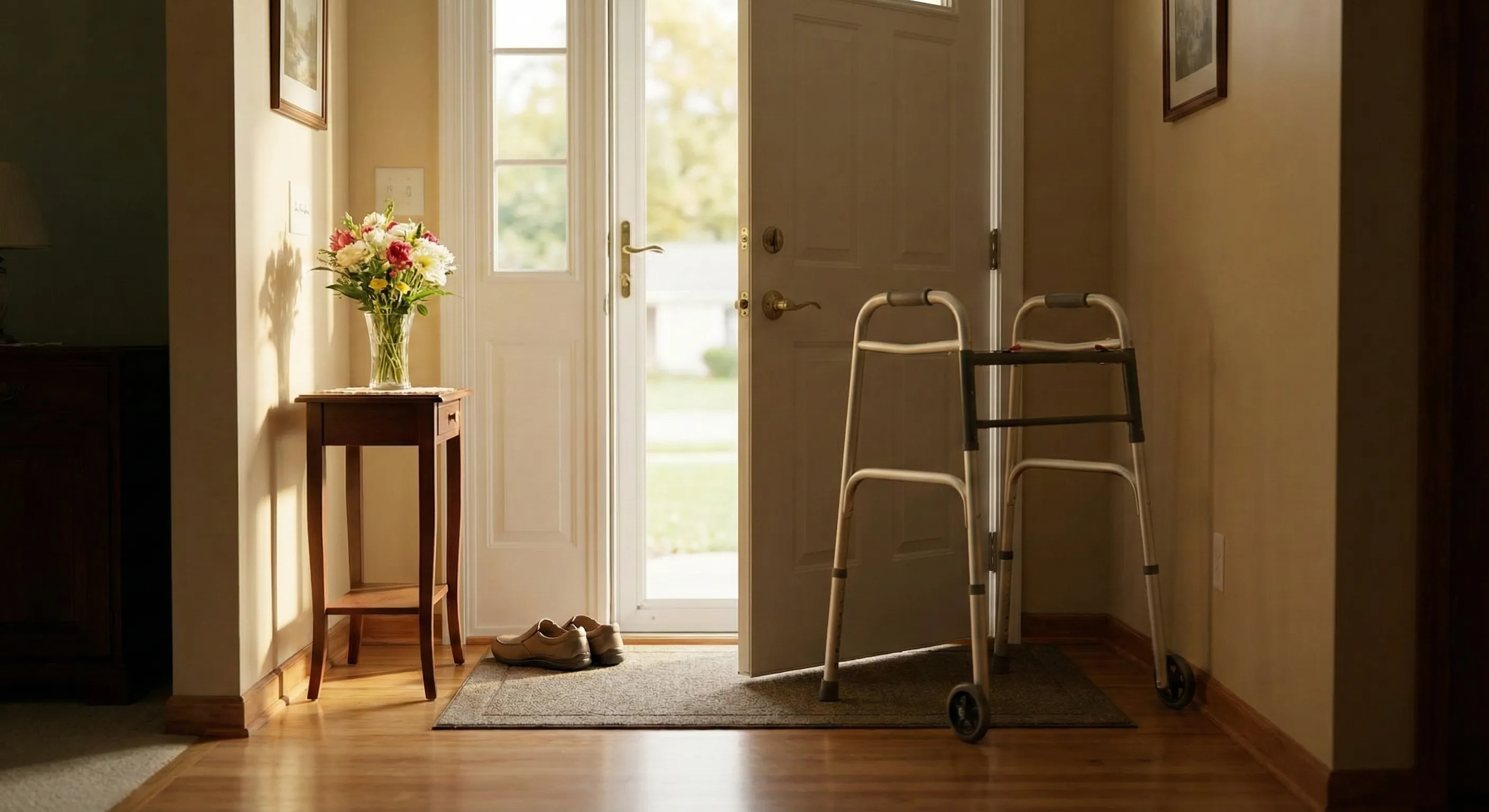
Coming home from the hospital.

They're being discharged. Now what? The next few weeks are critical β€” and often undersupported.

Hospital discharge isn't the finish line. It's the starting point of a vulnerable period.

After hospitalization β€” whether for a fall, surgery, illness, or procedure β€” patients go home weaker than before. They're on new medications. They may have mobility restrictions. And the "normal" they're returning to isn't quite as safe as it used to be.

This transition period is when most preventable readmissions happen.

The First 30 Days Are Highest Risk

1 in 5 Medicare patients are readmitted within 30 days
75% of these readmissions are potentially preventable
#1 cause: failure to recognize warning signs early

The risk isn't about what happened in the hospital. It's about what happens after.

What Families Worry About

πŸ’Š

Medication changes

New prescriptions, stopped medications, confusing timing. Errors are common β€” and dangerous.

❓

Recovery uncertainty

"Is this normal healing or something wrong?" When you don't know what to expect, everything feels alarming.

😴

Early complications

Infections, blood clots, reactions to meds β€” they can look like "just being tired" at first.

🚢

Post-hospitalization weakness

Hospital stays cause rapid deconditioning. Patients often leave weaker than they arrived.

What Can Go Wrong

The hospital sent them home because acute treatment was done. But the recovery period is fragile:

  • Falls during the first weeks β€” mobility is compromised; homes aren't set up for it
  • Readmission for preventable issues β€” symptoms that ramped up without anyone noticing
  • Medication mishaps β€” wrong doses, drug interactions, confusion about timing
  • No one sees the trend β€” recovery should be gradual improvement; a downward drift is a red flag

Hospitals discharge patients. They don't monitor what happens next. That's where families get left holding the bag.

What Helps

1

Prepare the home first

A pre-discharge home safety review identifies hazards before they come home β€” stairs, bathroom access, mobility barriers.

2

Make quick improvements

Simple modifications β€” bedside rails, bathroom grab bars, shower seats β€” make recovery safer without construction.

3

Monitor recovery patterns

Pattern tracking during recovery shows whether activity is improving, stable, or declining β€” so you can act before readmission.

The Discharge Gap

Hospitals assume someone is watching at home. Home health visits, if they happen, are brief and spaced out. Between those touchpoints, families are on their own.

StillWell Health exists in that gap. We help you see what's happening day to day β€” not just when a nurse can visit. So you're not guessing whether today was a "good day" or a sign of trouble.

Recovery shouldn't be a blind spot.

We Serve Families Near You

StillWell Health supports families in the St. Louis Metro East region with post-discharge recovery support and home safety solutions.

The first 30 days after discharge are the highest-risk periodβ€”and the home environment plays a significant role in readmission risk.

In situations like this, the most effective first step is a professional home safety reviewβ€”before they come home.

Planning for discharge?

We can help you prepare the home and set up support before they come back. The earlier you start, the safer the transition.